Graduates of Distinction
Summer 2026 Issue
![]() Graduates of Distinction
Graduates of Distinction
Honoring Excellence
Each year, the ESF Alumni Association recognizes alumni whose achievements, leadership, and service embody the mission and spirit of the College. The Graduates of Distinction program celebrates those who have made meaningful, lasting contributions to their fields and communities.
This year, we will formally honor our 2026 recipients in September during Fall Fest: Homecoming & Family Weekend, but we are proud to introduce them now.
Lewis H. “Lew” Payne ’84 (Lifetime Achievement) is celebrated for pioneering integrated vegetation management across North America, overseeing 24,000 acres of NYPA transmission corridors, advancing pollinator conservation, and setting national standards for habitat-focused utility stewardship.
Sam Gordon, AICP ’97, ’01, ’05 (Notable Achievement) is recognized for a 26-year career advancing community planning across Central and Upstate New York, including leadership in neighborhood revitalization, regional clean-energy initiatives, and the award-winning countywide Plan ONondaga comprehensive plan.
Sarah Welz ’18 (Incipiens Quercu) is being honored for transforming Nashville’s urban forest through large-scale tree planting, GIS-based canopy management, and leadership in the Root Nashville campaign, work that has strengthened canopy equity and earned statewide recognition.
Together, these three outstanding alumni demonstrate how ESF graduates shape stronger communities, healthier ecosystems, and a more resilient future.
Lewis H. “Lew” Payne RS ’81/’84
Lifetime Achievement
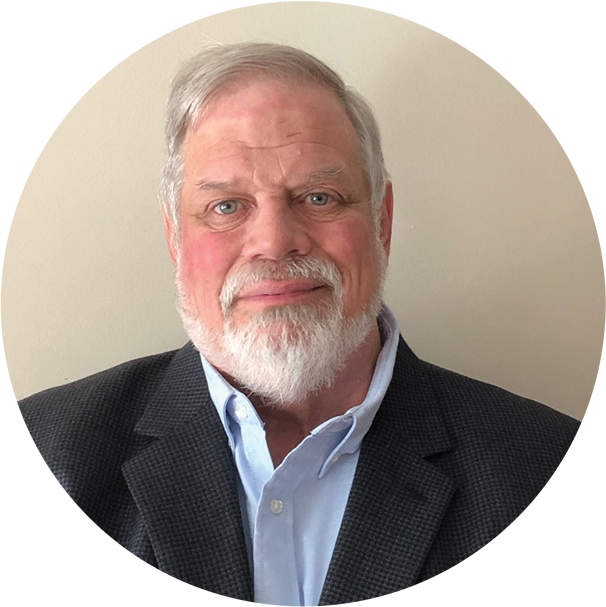
Lewis H. “Lew” Payne has spent more than four decades redefining how the utility industry approaches land stewardship, biodiversity, and ecological responsibility. Today, he is recognized across North America as a pioneer in integrated vegetation management (IVM) and a driving force behind transforming utility corridors into thriving wildlife habitats.
Raised in the Adirondacks, Lew developed an early and enduring connection to forests, wildlife, and the working landscape. That foundation led him to the Ranger School in 1981, and then to ESF, where he completed his bachelor’s degree in Forest Resources Management in 1984.
His education shaped not only his technical expertise, but also his belief that land management should balance human needs with ecological integrity — a concept that would guide his entire career.
Throughout his professional life, Lew has dedicated himself to advancing the ecological management of rights-of-way (ROW) across the northeastern United States. Long before habitat-friendly corridors became a national priority, he championed and helped pioneer IVM, a science-based approach that replaces the old routine of constant mowing and hand-cutting with selective, ecologically informed stewardship.
As ROW/environmental manager for the New York Power Authority, Lew oversees 24,000 acres of transmission corridors, where he has spent decades advancing the ecological management of rights-of-way (ROW) across the northeastern United States. Under his leadership, NYPA became one of the first utilities in North America to earn accreditation as a Right-of-Way Steward Utility. And because he has spent decades teaching, advocating, and demonstrating the value of this approach, his influence extends far beyond New York, indirectly shaping millions of acres of utility lands across North America. Today, New York’s transmission corridors are widely regarded as a gold standard for balancing safe, reliable power delivery with meaningful wildlife conservation.
Lew also led NYPA and the New York Canals to join the federal Candidate Conservation
Agreement with Assurances (CCAA) for the monarch butterfly. The CCAA is a partnership
with the U.S. Fish & Wildlife Service in which organizations proactively manage habitat
for species at risk. For Lew and NYPA, this meant transforming thousands of acres
of transmission corridors into high-quality pollinator habitat, and formally committing
to long-term ecological stewardship. Lew was instrumental in designing how NYPA would
meet these conservation goals, integrating IVM practices, native vegetation, and pollinator-friendly
management into a
system-wide strategy. His leadership placed NYPA at the forefront of national pollinator
conservation and demonstrated how large
utilities can play a meaningful role in protecting vulnerable species. Lew’s work
has been recognized across the industry and beyond. He is a multiple recipient of
the EPRI Technology Transfer Award, has been featured in documentaries such as Power
for Pollinators, and his efforts are highlighted in the ROW Environmental Showcase.
He contributes to peer-reviewed scientific journals and is tireless in sharing his
knowledge. Known for explaining complex concepts with ease, Lew has become a sought-after
voice, engaging audiences from neighborhood conservation groups to major industry
conferences. He has served in leadership roles with CEATI, EPRI, the Environmental
Energy Alliance of New York, the Utility Arborists Association, and the Right of Way
Stewardship Council, where he served as chair from 2019–25. As he approaches retirement,
Lew’s legacy is unmistakable: thousands of acres of restored habitat, millions more
influenced through his advocacy, and an entire industry pushed toward ecological responsibility.
He remains, in his daughter’s words, “a testament to the quality education and dedication
to the natural world that are instilled in ESF graduates.”
Sam Gordon, AICP ʼ97/ʼ01/ʼ05
Notable Achievement
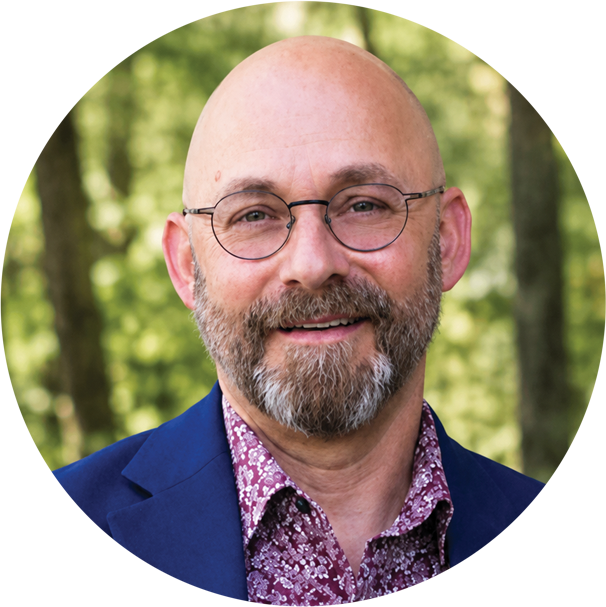
Sam Gordon brings ESF’s mission to life through a 26-year career dedicated to strengthening communities across Central and Upstate New York. With degrees in Environmental Policy and Management (1997), Environmental & Community Planning (2001), and Landscape Architecture (2005), Sam has built a professional life grounded in interdisciplinary work and a deep commitment to environmental responsibility and public service. His career reflects dedication to strengthening the built and natural environment through thoughtful planning and meaningful community partnerships.
Sam’s path began in Syracuse, where his early work with the city’s Department of Community Development placed him at the heart of the Syracuse Neighborhood Initiative, a major effort to strengthen and reinvest in city neighborhoods.
In that role, he worked directly with neighborhood steering committees, city staff, and local nonprofit partners to understand what residents were facing day-to-day. He helped assess housing conditions, pinpoint reinvestment priorities, and craft neighborhood-specific plans that guided everything from home repairs to public space upgrades. His work also supported efforts to rebuild neighborhood identity and deepen community engagement. Many of the approaches he helped to shape still influence how Syracuse pursues equitable development today.
Sam’s commitment to regional sustainability took root during his years with the Central New York Regional Planning and Development Board. There, he helped communities take practical steps toward cleaner energy and climate readiness. He worked with municipalities to understand their energy use, identify opportunities to cut emissions, and plan for a more resilient future. His efforts helped bring in nearly $3 million in public and private investment to support projects that showed how clean energy olutions could work at the local level. Through this work, he played a key role in positioning Central New York as a leader in ommunity-driven climate action.
His impact widened again when he became director of planning and zoning for the Town of DeWitt, N.Y. In that role, he led the award-winning Elevating Erie project, which reimagined a long, underused stretch of the historic Erie Canal corridor along Erie Boulevard. What had once been overlooked infrastructure became a vibrant, multi-use bikeway, and is now a key link in the New York State Empire State Trail. Today, Sam leads the planning practice at Environmental Design & Research, D.P.C. (EDR), where he oversees a team working with communities across Upstate New York. Under his leadership, the group has grown significantly, both in size and in the scope of projects it takes on.
One of Sam’s most notable recent efforts is “Plan ONondaga,” the Onondaga County’s award-winning comprehensive plan. He guided the planning process as the region prepares for major growth tied to Micron’s investment. The plan lays out a vision for how the county can grow while protecting natural resources, supporting housing needs, and improving transportation options.
Sam’s commitment to service extends well beyond his professional role. He has long been active in local nonprofits, serving on the boards of FOCUS Greater Syracuse, the American Planning Association’s Central New York Chapter, the Open Hand Theater, and the Zen Center of Syracuse, where he has served as Board President for more than a decade. In 2025, he joined the SUNY ESF college foundation board of directors, continuing his connection to the institution that shaped his career.
Sam’s work has earned recognition throughout the region, including multiple awards from the American Planning Association, the SUN Sustainability Award, and the Greening Our Community Advocacy Award. These honors reflect a career defined by collaboration, creativity, and a genuine commitment to helping communities thrive.
Sarah Welz ʼ18
Incipiens Quercu (Begining Oak)
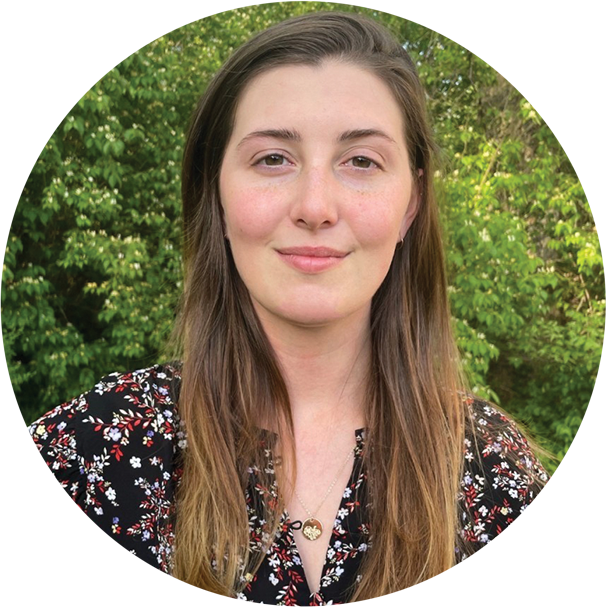
In the eight years since graduating from ESF with a degree in Conservation Biology, Sarah Welz has become one of the most influential early career leaders shaping the future of urban forestry in Tennessee. Her work as urban forestry project manager for Metro Nashville and Davidson County has reshaped the city’s canopy, strengthened community partnerships, and elevated the role of trees in building a more resilient urban environment.
Sarah oversees every phase of Nashville’s tree-planting efforts, from dentifying project sites, selecting species, managing contractors, and guiding the care of thousands of young trees annually. During the 2024–25 planting season alone, she coordinated the installation of 903 new trees, a milestone that reflects her commitment to expanding access to green space.
Her leadership is central to Root Nashville, a public-private campaign to plant 500,000 trees by 2050, where she works closely with the Cumberland River Compact to connect healthy forests with watershed resilience.
A gifted communicator, Sarah represents Metro Urban Forestry at community events, teaches at the Citizens Water Academy, and visits public schools to introduce students to the science and importance of trees. She prioritizes planting projects in underserved neighborhoods disproportionately affected by urban heat, ensuring that environmental benefits reach the communities that need them most.
Sarah’s influence extends into statewide leadership as well. She serves on the Metro Tree Advisory Committee and the Tennessee Urban Forestry Council, where she is a board member and president. She inspects arboretums, contributes to statewide forestry initiatives, and helps plan the annual TUFC conference. Her 2024 webinar on Nashville’s Urban Tree Canopy Study drew more than 150 attendees and even captured the attention of NASA, leading to new funding for canopy studies in disadvantaged communities.
Sarah’s work is marked by innovation as much as impact. She leads Nashville’s GIS-based tree-tracking system, overseeing data on 63,000+ trees and is improving the platform after pinpointing critical areas for refinement. Sarah has been described by colleagues as “an indispensable leader” whose contributions have had “a clear and measurable impact on Nashville’s urban forest.”
In recognition of her achievements, Sarah received the 2025 Tennessee Urban Forestry Council Government Employee Award of Excellence, an honor that underscores her growing influence in the field.
As a young professional whose early career reflects leadership and impact, she brings people together around a shared commitment to a greener, healthier, more resilient future. Nashville’s canopy is stronger because of her, its communities cooler, its data smarter, and its partnerships deeper. She carries forward the values she cultivated at ESF: scientific rigor, environmental stewardship, and a belief that change grows from the ground up.